New Construction in Lake Elmo: What to Compare Before You Sign
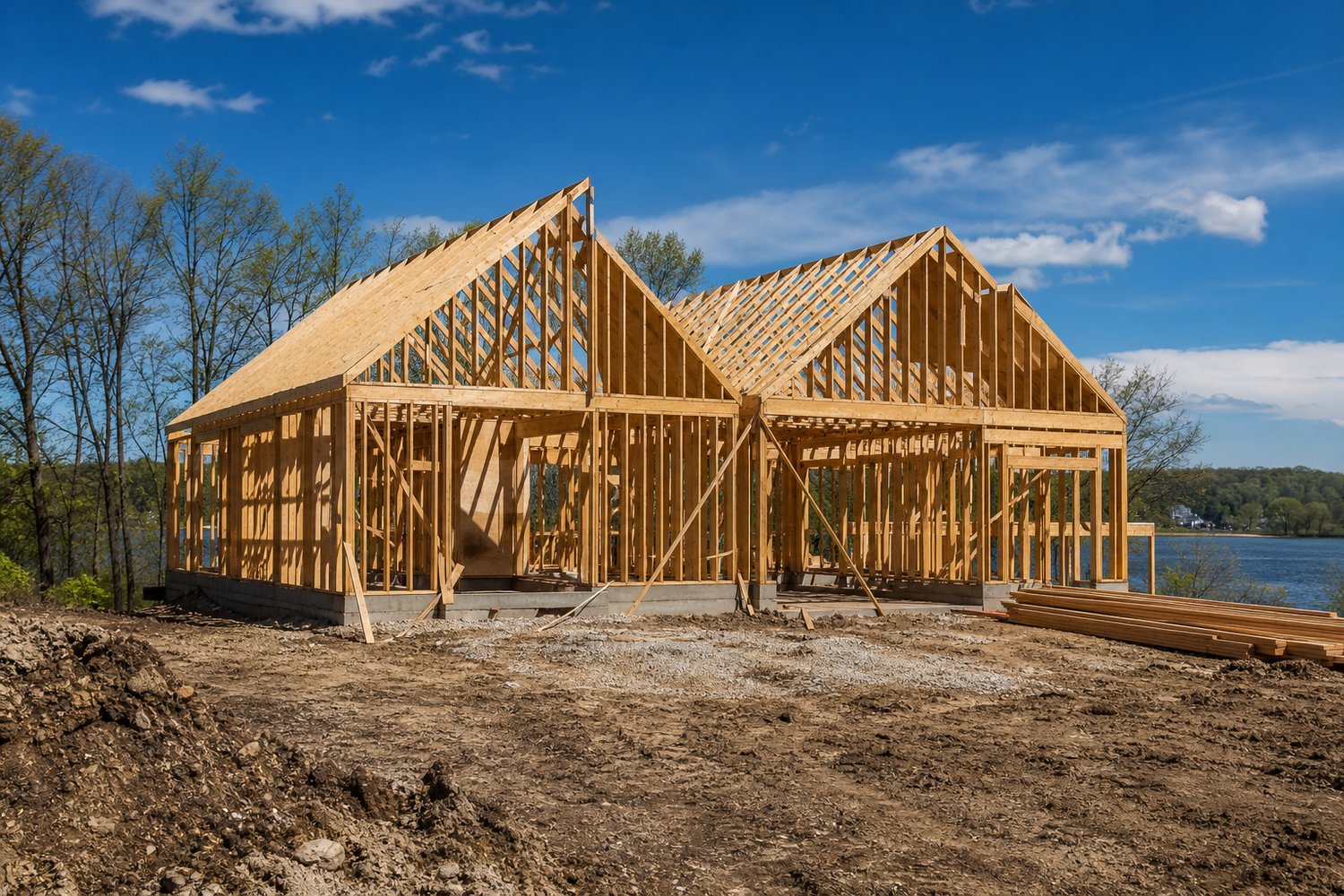
Before you sign a builder contract in Lake Elmo, get five things in writing: the specification sheet, the lot and site-work assumptions, the completion-date terms, the warranty documents, and your right to bring in a private inspector. Then compare that package against nearby resale homes in the same categories. The model home shows finishes. The contract shows what you're actually buying and what happens if something slips.
By Jason Lange, REALTOR® with RE/MAX Results · Licensed in Minnesota since 2004 · Has had two homes built for his own family · Published November 12, 2026
What should I compare before signing a new construction contract in Lake Elmo?
Compare the base price, lot and site work, completion-date terms, warranty paperwork, and inspection access. Two builders' model homes in Lake Elmo can look nearly identical while the contracts behind them differ on every one of those points. Get the specification sheet and every allowance in writing, then hold the whole package up against nearby resale homes. That comparison tells you what the price really covers.
I've had two homes built for my own family, one in Settlers Glen in Stillwater and one in Farmington. I've also been helping buyers with new construction in and around Lake Elmo for nearly 20 years, from a 2006 Parade of Homes model just east of town to Lake Elmo model, spec, and custom homes more recently. Building can be a great experience. You choose the plan, the lot, and the finishes, and you move into a home no one else has lived in. My goal with this guide is to help you enjoy that part with confidence, because you'll know what the contract covers before you sign it.
Key Takeaways
- Compare a new build against two or three nearby resale homes in the same price range, category by category, not just by price.
- Minnesota's Attorney General says home-building contracts and change orders should be in writing, with a detailed description of the work, the materials or standard features, and the total price or how it's calculated.
- Minnesota's statutory new-home warranties (Minn. Stat. ch. 327A) cover defects caused by noncompliance with building standards: one year for workmanship and materials, two years for plumbing, electrical, heating, and cooling installation, and 10 years for major construction defects. A "10-year warranty" is not blanket coverage.
- To make a statutory warranty claim, you generally need to notify the builder in writing within six months of discovering the problem.
- Lake Elmo's city inspections focus on code requirements at set construction stages. A private inspector gives you an additional review on your behalf.
Before-you-sign checklist
- Specification sheet: what's included at the base price, in writing.
- Allowances and upgrades: each one listed with a dollar amount, and how overages are billed.
- Lot and site work: what's assumed about soil, grading, drainage, utilities, and landscaping, and who pays if those assumptions are wrong.
- Completion terms: target date, allowed extensions, notice requirements, and what happens at closing if work is unfinished.
- Warranty package: the builder's private warranty, the claim process, and confirmation that the statutory warranties haven't been modified.
- Inspection access: written permission for your own inspector before drywall and before closing, plus a follow-up visit if needed.
- Financing: your lender's read on rate-lock length, earnest money, cancellation, and appraisal terms.
- Resale comparison: two or three nearby resale homes in the same price range, compared category by category.
Before you tour a model home: some builders have registration policies for buyers who want their own agent, and they may require the agent to be with you on your first visit. If you'd like me involved, reach out before you go. If you've already toured, we can still compare the contract line by line.
How does new construction in Lake Elmo compare with buying resale?
Compare them category by category instead of by sticker price: usable finished area, lot, age of major systems, move-in certainty, and what you can verify before you commit. A model home shows you finishes. A resale home shows you how the lot, the drainage, and the street actually perform.
Lake Elmo is a good example of why this matters. The city has newer subdivisions, acreage, luxury homes, and more traditional suburban housing, and they don't behave like one market. A citywide median price won't tell you much about a specific builder plan. The most useful comparison is two or three resale homes near the subdivision you're considering, in the same price range.
Plenty of Lake Elmo's resale homes are only a few years old. In 2019, I helped clients build a custom home by Michael Lee in Easton Village, off Northport Drive in Lake Elmo. It's a two-story with a three-car garage on a little under half an acre. They built it with the lower level unfinished and later finished it with a fifth bedroom, a full bath, and storage. A home of that age is worth setting beside a new build. The lot and drainage have a few years of history, and work that would be an add-on in a new contract, like a finished lower level, is already done.
Here is how I frame the two options when a buyer is weighing them:
| Category | New build | Resale home |
|---|---|---|
| Major systems | Newer, with warranty coverage under the contract and Minnesota law | Age and condition vary, so inspection findings matter |
| Finishes | Selected by you, with each upgrade priced in the contract | Already installed, so you see what you're getting |
| Drainage and grading | Depends on final grading and erosion-control follow-through | Visible history, including how the lot handled wet seasons |
| Move-in date | Estimated, with terms for delay set in the contract | Set by the purchase agreement and closing date |
| Surroundings | May include unbuilt lots, future streets, and construction traffic | Neighborhood is more established and easier to observe |
If you're also weighing nearby cities, I wrote about how buying in Woodbury and Cottage Grove when inventory is high changes your leverage. For a smaller-scale new-build example in the East Metro, see my breakdown of the new villa homes at BayHaven in Bayport.
What should the builder's contract spell out before you sign?
Everything you're paying for, and when you'll get it. The Minnesota Attorney General's guidance on home building says contracts and change orders should be in writing, with a detailed description of the work, the materials or standard features, and the total price or the basis for calculating it. That's your checklist for comparing one builder against another. The same guidance suggests that on a large project, it may be worth having an attorney review the contract.
Having two homes built for my own family put me on the buyer's side of this process. Helping clients through it in Lake Elmo, with builders including Pulte, Hanson Builders, and Michael Lee, showed me that every builder's contract is set up a little differently. The differences usually show up in the details rather than the model home. I started my career as a mortgage loan officer, which also shapes how I read these contracts, because price, financing, and timing all tie together. A builder's sales team works for the builder, so it helps to have your own advice at the table.
How do you compare the advertised price with the actual contract price?
Separate the base home from everything else. The model you toured is rarely the base specification. Builders use models to show what they can do, so the finishes you fall for on a tour are often upgrades, not the starting price. (More on buying an actual model home below.)
Ask for the written spec sheet and sort every item into a column:
- Base home: what's included at the starting price, in writing.
- Allowances: flooring, lighting, plumbing fixtures, and appliances, and what happens when your choices exceed the allowance.
- Lot premiums and structural options: orientation, walkout or lookout lower level, garage depth, and extra windows.
- Finishes and extras: cabinets, counters, trim, window coverings, deck or patio, and unfinished lower-level work.
- Landscaping and exterior: sod, irrigation, fencing, and driveway requirements.
Your actual number depends on the plan, the lot, and your selections. Here's one real example. In 2019, I represented buyers on a new Pulte home in Northport, off Manning Avenue and 30th Street in Lake Elmo: a four-bedroom two-story with an unfinished walkout lower level. The list price was $436,355, the final price was $438,360, and the closing included a $7,000 seller contribution. The lesson for buyers is that the advertised price, the contract price, and what you pay at closing can be three different numbers, so it pays to see every piece in writing.
If you want help laying two builder packages side by side, that's a conversation I'm glad to have before you sign anything.
What about buying a model home or a spec home?
Both can be a middle path between building and buying resale. A model home is the one the builder used for tours. A spec home is one the builder started without a buyer, so it may be finished or still under construction when you find it. Either way, you can see much more of what you're getting than you can from a plan, and it's still new construction from the builder. I've represented buyers on both, at very different price points, and the same questions keep coming up.
Here in Lake Elmo, I helped clients buy Pulte Homes' Bowman model, an end-unit townhome in Union Park near the Woodbury border. Pulte listed it in February 2023 at $459,990 with incentives available, and it closed in March 2023 at $420,000 with no seller contribution. Because it's a townhome, we also looked closely at the association. Dues at the time of purchase were $197 a month and covered the building exterior, lawn care, snow removal, and professional management. The lesson: on a model townhome, the price and the association documents both deserve a careful read.
On the spec side, I helped clients buy a one-story Hanson Builders spec home in Legacy at North Star in Lake Elmo. The builder listed it in July 2022 at $659,990, cut the price to $639,990, and the listing expired after about six months without a sale. My clients closed on it in August 2023 for $560,000. That's $99,990 below the original asking price, but keep in mind the price had already been cut and the listing had expired before my clients made their offer. Not every spec home will have that kind of room, but it's a good reason to ask how long a finished one has been waiting for a buyer.
I've been doing this in the area for a long time. One of my first luxury sales was back in 2007, for a client relocating to Minnesota from Gig Harbor, Washington. I picked him up at the airport, and we spent a lot of time together touring homes and exploring new construction with several builders, in communities like Inspiration in Bayport and Miller Farms in Baytown Township. He ended up buying Derrick Custom Homes' 2006 Parade of Homes model in Miller Farms, just east of Lake Elmo. It closed at $848,000 against an $861,800 list price. Nearly 20 years later, it's still a good reminder of how much more a builder puts into a Parade model than into a base plan.
These are past transactions, shared to show different buying situations. They aren't a guide to the pricing or discounts you should expect today. Every builder, community, and season is different.
If you're looking at a model or spec home in Lake Elmo today, a few questions are worth asking up front:
- For a spec home, what can you still choose? If it isn't finished, ask which selections are still open, what they cost, and how changes affect the completion date.
- How long has it been finished? A spec or model home that has been complete for a while may give you more room on price, closing date, or included items.
- What's included? Get a written list of what stays with the house, such as window treatments, light fixtures, and any furniture or décor, and what the builder is taking back.
- How was it used? A model has had months of foot traffic. Ask about wear, touch-up work, and any systems that ran while it was open for tours.
- When does the warranty start? Minnesota's statutory warranty generally starts when the buyer takes possession or title. Confirm that in writing, along with the start date of the builder's own warranty.
- Is there room to negotiate? It depends on the builder, the season, and how long the model has been on the market. Price, closing date, and included items are all fair to discuss.
- What incentives are offered, and in what form? Builders sometimes offer incentives as a price reduction, closing-cost help, or a rate buydown through a preferred lender. Ask for each option in writing and run the numbers with your own lender, because the best choice depends on how long you expect to keep the loan.
- For a townhome, what does the association cover? Ask for the dues, the budget, and the governing documents, and confirm who handles the roof, exterior, lawn, and snow.
- Do you still need an inspection? It's worth having one. A private inspection before closing gives you a review on your behalf, even on a finished home.
Who handles lot and site work in Lake Elmo?
Whoever the contract says does, so find out before you sign. Ask whether the quoted price assumes ordinary soil conditions and whether excavation, rock removal, dewatering, retaining walls, grading, drainage improvements, utility extensions, and final landscaping are included.
Erosion control is a good example of why this matters. Lake Elmo's new single-family home building permit materials state that Minnesota Pollution Control Agency requirements, city ordinances, and watershed rules call for practices that limit soil erosion and off-site sediment from new homes in approved subdivisions. Ask who maintains those controls during construction, who finishes the grading and swales, and who owns landscaping obligations afterward.
Also confirm in writing who pulls the building permit, arranges final inspections, and fixes anything that fails. The Attorney General's guidance advises that the contractor should obtain permits and inspections, since responsibility can shift to the homeowner if the homeowner pulls them.
What does the completion date commit the builder to?
Only what the contract says. Treat the estimated completion date as a contract term, not a sales-office forecast. Look for the target date, allowed extensions, notice requirements, consequences of delay, and how incomplete work is handled at closing, including whether a punch-list escrow or temporary occupancy is possible. The Attorney General's guidance notes that delays do happen, which is why it suggests a contract set an anticipated start and completion date along with language on reasonable delays.
Schedules can go either way. On the Northport home, the buyers went under contract in early March 2019 with a projected closing of June 28, and they closed a week early, on June 21. That won't be true of every build, which is why the contract terms matter more than the estimate.
How does financing fit a build timeline?
The closing date in a build isn't fixed the way it is on a resale. Talk to your lender before you sign about how a delayed completion would affect your rate lock, and ask what the lender needs at closing. Also read the contract's earnest money and cancellation terms and how an appraisal shortfall would be handled. These are questions I'd rather you ask before signing than discover afterward.
Ask about preferred-lender incentives, too. Builders sometimes tie closing-cost help or rate incentives to using their own lender. On the Northport home, for example, Pulte advertised an incentive for using its preferred lender. An incentive can be worth taking, but compare the full loan offer, including the rate, fees, and lock terms, against at least one outside lender before you decide. My mortgage background is a big part of why I look at it that way.
Can you hire your own inspector, and what does the warranty cover?
Yes, you can arrange your own inspection, but the contract and the stage of construction determine what access you get. Get the builder's permission in writing, and ask for the inspection schedule up front.
When should a private inspector see the home?
Usually before drywall and again before closing. City inspections matter, and they serve a specific purpose. The City of Lake Elmo's building page explains that required inspections occur at key construction stages and that 48 hours' notice is needed to schedule one. Those inspections focus on applicable code requirements. A private inspection adds a review done for you, which can include workmanship and finish items you care about as the buyer.
A practical plan for a new build looks like this:
- Before insulation or drywall, where the builder allows it, so framing and mechanical rough-ins are still visible.
- Before closing, so anything incomplete or needing correction is documented and tied to the contract.
- A follow-up visit if needed, to confirm items from the pre-closing inspection were completed.
Ask the builder for copies of the municipal inspection records and corrections, and follow site-safety rules when your inspector visits. The city's new-home permit form also points to inspection records and survey-related documents, which are worth asking about.
What does Minnesota's new-home warranty actually cover?
It covers three different things for three different periods. Under Minnesota Statutes section 327A.02, as summarized in the Attorney General's home-building handbook, the periods are:
- One year for defects caused by faulty workmanship or defective materials due to noncompliance with building standards.
- Two years for defects caused by faulty installation of plumbing, electrical, heating, and cooling systems due to noncompliance with building standards.
- 10 years for major construction defects due to noncompliance with building standards.
Three details matter when you read the paperwork:
- When the clock starts. For a new home, coverage generally begins when you take possession or title, whichever comes first. Confirm the governing date in your contract.
- How to make a claim. The Attorney General's guidance says the first step is written notice to the builder, generally within six months of discovering the problem. The Minnesota House Research summary of new-home warranties also explains the dispute-resolution steps and the deadline for going to court.
- Whether anything was changed. Under Minnesota Statutes section 327A.04, an agreement to waive or modify the statutory warranties is generally void. A modification is allowed only in limited cases, and the builder must provide substitute express warranties offering substantially the same protections. There's a separate, narrow exception for a specific disclosed major defect, with its own requirements, including recording. A signature alone isn't enough. If a builder asks you to sign anything that changes the warranty, have an attorney review it.
Before signing, also request the builder's private warranty, the claim deadlines, the emergency-repair procedure, and the dispute-resolution language. A private warranty can add to the statutory protections, but only if the paperwork says so. The statutory warranties also transfer to later owners for the rest of their terms, which is worth knowing if you think you may sell within a few years.
What should you check about the neighborhood around the model home?
Look at what is approved but not yet built. The model home is the finished version of the subdivision, and your lot may sit next to open parcels, future streets, or unfinished common areas for a while. Lake Elmo's Community Development Department oversees planning, zoning, permitting, inspections, and code enforcement, and the city's development projects page shows active land-development review.
Ask the builder and the city:
- Which lots in the approved plan remain unbuilt?
- Where are future streets, parks, and utilities planned?
- Could nearby parcels be developed, and under what planning and zoning rules?
- How long should you expect construction traffic or unfinished improvements?
Also look at what's already around the subdivision, not just what's planned inside it. Northport, for example, sits along Manning Avenue across from the Lake Elmo Airport. That's easy to check on a map, and worth seeing in person at different times of day before you choose a lot.
This is where a resale comparison earns its keep. With an established home, you can visit at different times of day, see how water moves after a rain, and see what the neighbors have already built. If you're weighing Lake Elmo timing more broadly, my post on fall listings in Lake Elmo covers the resale side. With new construction in Lake Elmo, you're buying a plan and a promise, so the paperwork matters as much as the house.
If you'd like to see what past clients say about working with me, you can read their feedback on Google and Zillow.
FAQ
Can I hire my own home inspector for a new construction home in Lake Elmo?
Yes, you can arrange an independent inspection, but your access depends on the contract and the construction stage. Get written permission from the builder, ask for the inspection schedule, and plan for an inspection before drywall and another before closing, with a follow-up if needed.
What is usually included in the base price of a new-construction home?
It depends on the builder, which is why the written spec sheet matters. Minnesota's Attorney General advises that home-building contracts describe the work and the materials or standard features in writing, so base inclusions, allowances, and upgrades should all appear on paper before you sign.
How long does it take to build a new home in the Lake Elmo area?
The builder's schedule and the contract's completion terms are the best guide. Ask the builder how they handle delays, extensions, and incomplete work at closing, and talk with your lender about how a later closing would affect your rate lock.
What happens if the builder misses the estimated completion date?
It depends on the contract language. Look for the target date, allowed extensions, notice requirements, and any stated consequences of delay. Also talk to your lender about how a later closing would affect your rate lock.
What does Minnesota's new-home warranty cover?
Under Minnesota Statutes chapter 327A, it covers defects due to noncompliance with building standards: one year for workmanship and materials, two years for faulty installation of plumbing, electrical, heating, and cooling systems, and 10 years for major construction defects. Request the builder's private warranty too, and read the exclusions and claim deadlines closely.
Should I consider buying a builder's model home or spec home?
It's worth a look if you want new construction without waiting for a full build. You can see much more of the house than you can from a plan, and models usually show the builder's upgrades. Get a written list of what's included, ask about wear from tours, ask what incentives are offered and in what form, confirm when the warranty starts, and still hire a private inspector before closing.
How do I make a warranty claim on a new home in Minnesota?
Start by notifying the builder in writing. Minnesota's Attorney General says this generally needs to happen within six months of discovering the problem. Keep copies of your notice, photos, and any response, and read the dispute-resolution steps in your warranty documents.
Can a builder waive Minnesota's statutory new-home warranty?
Generally, no. Minnesota law treats an agreement to waive or modify the statutory warranties as void, with limited exceptions. A modification requires substitute express warranties offering substantially the same protections, and a narrow exception for a specific disclosed major defect has its own requirements. If a builder asks you to sign anything that changes the warranty, have an attorney review it.
The short version is that a model home shows you the finishes, and the contract shows you the commitment. Compare the specification sheet, the site-work assumptions, the completion terms, the warranty paperwork, and the inspection access before you sign, then hold that package up against nearby resale homes. If you'd like a second set of eyes on a builder contract or a side-by-side comparison, schedule a no-pressure buyer consultation. I'm glad to help you enjoy the process and feel good about what you're signing.
Sources
- Minnesota Attorney General, Home Building and Remodeling Handbook, Chapter 2
- Minnesota Statutes § 327A.02, Statutory Warranties
- Minnesota Statutes § 327A.04, Waiver and Modification Limited
- Minnesota House Research, Statutory New Home Warranties
- City of Lake Elmo, Building Department
- City of Lake Elmo, New Single-Family Home Building Permit
- City of Lake Elmo, Community Development
Equal Housing Opportunity. Jason Lange, Realtor® with RE/MAX Results. MN License #20457477 · WI License #62499-94. This article is general information, not legal, tax, or financial advice. Confirm your own numbers and contract terms with your title company, tax advisor, lender, or attorney as appropriate.